Ocean change

“Fish is food, my family will end up sitting with no fish to accompany their ugali”

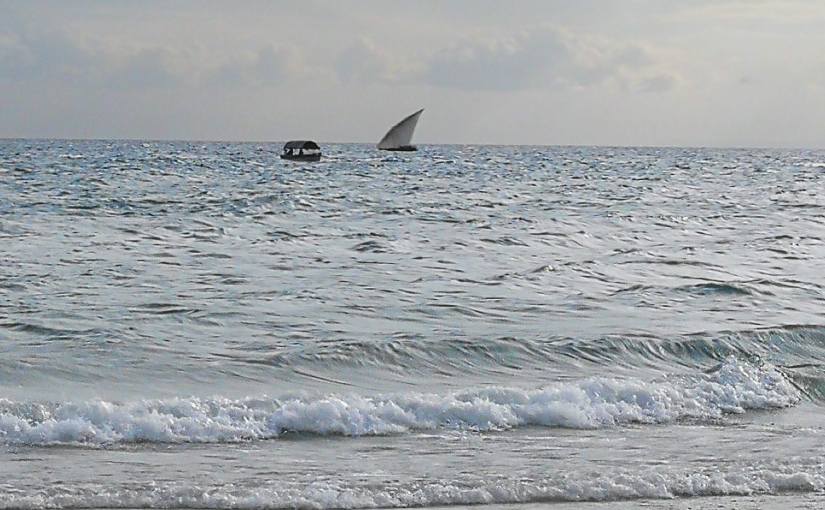
The ocean has become rougher, it is rising and there are strong winds. 

The waves are bigger, this can happen for three months when in the past it was only one- normally June – so low season kusi (for fishing activities) has been prolonged. The winds have become so strong, corals are broken and sea caves destroyed. There are stones washed up now. Kusi is more severe, which has caused the fish to migrate. The strong winds chase the fish away. Fish have moved to the deep sea, they have realised that they are declining in number and decided to escape to the deep sea. But our fishermen are not equipped with vessels to deal with this, with the traditional gears from this area, they can’t fish anymore in kusi. Fishers are afraid of going fishing sometimes, they don’t even come to the landing site. So there are much less fish, but trip times are longer and they more frequently come back with nothing. The catch is reduced. Incomes are low as they get so little. The ocean has nothing now and routines have changed. On the first and second day of fishing fishers land good catches but then on the third day they are getting worse. Fish trading is also not good because of less and less landings. The fishing environment has changed and our local fishers land less and less, so trading has declined. Fish prices have increased due to this scarcity. 

Before you could land big size fish onshore. Now there are less fish nearshore. Fishes are smaller now, there are less big fish available. Seagrasses are disappearing, the divers have seen this, fish see it as food so escape to the reef when there is none, so this affects income too. There are now less dolphins seen, they used to come to look for food here but now the food is gone too. The ocean has really deteriorated.

After an El Niño event all the roads were destroyed by the rain so there was no market for fish. The ocean is becoming dirty due to too much rain. This dirty ocean is causing reduced catches and hunger. The climate patterns have changed, it’s not easy to differentiate between summer and winter. 

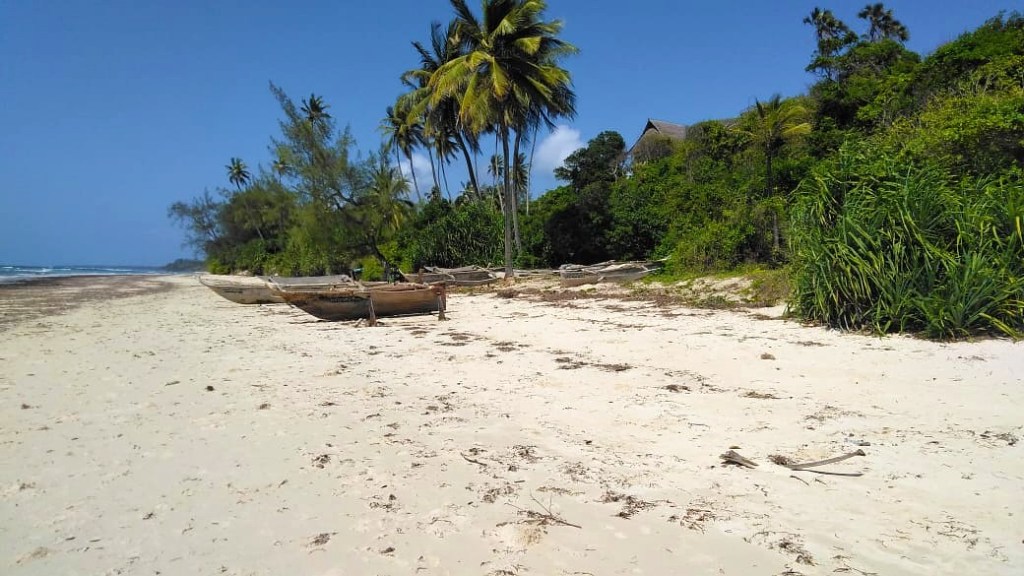
The sea level has risen. When the waves come they take the sand back to the sea and thus have strength to erode the beach. The beach is growing inwards to the land. Space is taken by the beach, trees have fallen down and the land is being eroded. The seashore was forested but now it’s dominated by beaches. In the past green grasses on the shore were many, they stopped the water from coming far in, the ocean waves were stopped. People who built the cottages (tourist accommodation) here cleared them all but the grass is very important.

The changing ocean climate- how can one handle this? The one who is responsible for this is Allah. We cannot do anything about it, it’s for Allah. This is beyond our power. There is no one to stop the sea. It is Allah’s plan, He brings all these things.  

The Wapemba cause our fish to decline! But there is also uncertainty whether it’s just the availability of fish or its due to the lack of gears, or maybe the ocean has no fish, we don’t understand. The number of people has increased here, there are more fishers now so the catch must decline. There were less fishers in the past, now fishers outnumber the fish. Fishing tools have become scarce also. Fishers dont have the equipment to follow the fish so they land less. Many have resorted to fishing since Corona started, so supply has diminished. There is a lack of alternative livelihoods here. 

There is also oil drilling in Lamu. Oil drilling and fish are incompatible, fish are disturbed and move to other places, so they are less available. At the same time our tengefu (marine protected area-Kiswahili for ‘set aside’) has been disbanded.

Some investors who have built along the beach have removed all the grasses so the sea has come all the way in. One owner, an Indian, we told him not to remove the grasses so the sea wouldnt come in but he refused, he dug them up and removed them all because he wanted beach and now the sea comes up. 
Tourists now might not be happy to go on boat trips in the Msambweni area because of the environmental changes, they should be brought to Shimoni marine park if they are to be happy. It is better to have these tengefu projects, the number of fish will increase. The change in availability and size of fish is not good for both fishers and tourists. If we get modern gears we can solve the problem, if we get equipment we can follow the escaping fish to the deep sea. Beach barriers should be installed to reduce the erosion of the land, for example some grasses. Sea walls are built but they are eroded. One must plan their farming and fishing according to the weather changes. Fish is food, my family will end up sitting with no fish to accompany their ugali. Even the tourists wont have fish to eat.
Ring nets and reefs 

“Ring nets carry everything away”. 

The ring net was brought here to Kenya, that is good, that is progress but these nets work against the regulations so certain fish species have been lost. Before these nets came the ocean was good. Fish were so many before, the fishing environment has been destroyed by ringnets. The visitors who have become many in our ocean have contributed to the destruction, they have come dragging their nets. The Wapembas come (Wapemba-“of Pemba”, people from the Zanzibari Island of Pemba, in this case the fishermen who migrate over towards the Kenyan coast to fish). 

Before the Wapembas the ocean was ok, they have brought disaster, there is nothing to fish. The Wapemba they fish each and every reef, destructive fishing, they are breaking the corals with the nets. They are not like Kenyans, they throw dead fish back into the sea that they have caught, they can catch too much and can’t transport them all. This is [the] Kenyan’s ocean not theirs. These foreigners don’t have the licences needed to fish here, when the coast guard patrols they hide in Gazi, when there is no patrol you can see Wapemba boats all over. There were no problems in the ocean before, you could get fish onshore, in the intertidal zone, you could catch tuna, bonito and kingfish there- now no way. The fish stay out far, they ran away. They are fishing at night, they clear everything. These foreigners have completely destroyed the ocean, especially the ring net fishers. They have spoiled fishing and they spoil the environment and particularly the coral reefs which are breeding grounds and fish refuges. When their big nets, which have small mesh sizes, get stuck on the reef one fisher dives down and hammers the coral to release it. They are in big vessels, 30 people or so, while local people are in canoes and outriggers. Their ring nets should not be cast so close to the shore, they drag everything, even our traps. Destruction and displacement. Income has declined due to the reduced catches that the Wapemba have cleared out. Msambweni fishers are suffering because of the Wapembas, because of them the ocean has no fish. They are hurting fishing and trading activities here, they also hurt food retail as if fishermen don’t land anything they don’t have cash to come and eat. Ring nets are the cause of our hunger. Won’t hunger prevail? We could have removed them a long time ago but it has been impossible because they are in the hands of the Government, they are with the leaders, thus we cannot get them out

We need support to face them, they are foreigners. They should go and fish in the areas they are meant to, the deep sea. The BMU (Beach Management Units), officers and organizations, NGOs need to sit down, to cooperate. The ring nets need to be removed so small-scale fishers can get fish. The Government needs to intervene with awareness, they need to act and not just lip service. The Navy needs to be deployed to arrest the ring net users, people cannot follow them alone because they can hurt you.

Farmlife

“As for farming, it is the security of any African man, I might get no fish but have something from the farm”

Rains are unpredictable, they are irregular now. The weather conditions for farming were not so bad long ago. Currently the seasons are changing, rains are not like they were in the past, they are coming less. In the past the rains came april, may and june, the long rains “masika”, and then you knew it was the short rains “vuli” during September and October. So you could plan yourself, you knew the season was like this and the next was like that. You could plan for yourself. But now we dont understand if they are “vuli” or “masika”, you are preparing your farm and the rain comes!  You plant your food in August knowing that the rain will come and it will do well, but now it’s September approaching October and no rains have come. You can’t know the planting period, we are totally confused! The weather has become unreliable. Our harvests are now bad, not like in the past. 

For the last two years it has rained throughout the year, before there was seasonal farming by some people, but now they can farm throughout the year- specifically in “vuli”, which they wouldn’t have before, only “masika”. When it rains the rains are very heavy and destroy the crop. It rains for one and half days then there is sun for one and half days. Daily routines have been ruined due to irregular rains, causing crops to be reduced. 

Rains are what affect the cows too, it is like if you are hit by rains you get sick it is the same with cattle. If hit by rains they get sick too. Now if I will be able, I will build the shade when they come from grazing, they stay comfortable inside the shade. They will be out of the sunshine and going into the shade, they will thank Allah too. Cows were healthier in the past because they had plenty of pastures but now there are insufficient pastures.

Farming has also declined due to too much sun. Sunny days have become many and rainy days even fewer. Harvest is very low. Maize and cassava had better harvests in the past, millet also. In the past you could get maize and use it till the beginning of the next season “Kaskazi” but now it doesn’t reach the next season. 

Maize is not growing well now without fertilisers. There are more pests now, if you do not use pesticide you will get a poor maize crop. The crops are more affected by diseases now, they do not produce a lot. People cultivate bigger fields now and get less crop than the few acres that were cultivated in the past. Seeds have also reduced in quality. Our grandparents used to source seeds from the previous harvest and smoke them to preserve them for the next planting season. Yields have reduced. The land was more fertile in the past. We didn’t need fertilisers from the shops then. 

Maybe factories are contributing to the changing rainfall. We have cut down all the trees and burned charcoal, now there is pollution, maybe that is what made us receive low rainfall. The changing weather has caused the land to lose its fertility. 

There is no fertilizers available so crops have been reduced.

We need fertilizers from the shops. Manure would help the land to become more fertile if we can get it. Maybe if there was an irrigation system you could harvest the crops that need it while waiting for the rainy season. We are using traditional methods of farming that is why we have low harvest but the truth is farming is wealth. We are poor! Therefore if we could get modern farming methods, you could have seen maize from Mwaembe to here at Kingwede landing site. We need to get training on modern farming. This is because we are used to the traditional, we need to get farming tools like tractors, seeds and pesticides so that we can get knowledge so as to change our lives. If I get a modern dairy cow it will be made better, one modern cow is worth ten local/indigenous cows. Every morning I would have ten more litres of milk for selling.

One must plan their farming and fishing according to the weather changes. Allah is the giver of rain so He knows the causes of these changes for farming. He gives us challenges so that we can remember Him, if you remember Him, He blesses you.

Jekejeke

In 2021 the FoRel Project completed the writing and performing of two forum theatre plays in Msambweni, Kwale, Kenya. Each of them based on the fieldwork done over the previous two years- namely interviews and discussions with all types of people living and working in Msambweni (of the Digo tribe).

FoRel stands for Forum theatre and Relational, two of the approaches the project is taking. The project carried out forum theatre, a type of participatory theatre created to get the audience involved and empower them. The project is relational, a perspective which emphasizes that relations are more important than units, that everything unfolds or comes about from relations and experiences, never static. 

The aim of FoRel, coming to an end this year, was to put together Forum Theatre performances with people who live in coastal East and Southern Africa as a means to provide the space for them and their friends, neighbours, families, communities, to think about, act out, discuss, dispute, and maybe take action on the climatic, natural, social and economic changes happening around them, with them and/or through them.

Jekejeke (equivalent to trouble in Kiswahili) captures the social issues to do with early pregnancies, misconduct among young people, drug use and alcoholism. These conflicts came directly from people’s voices during fieldwork and were subsequently written into a script called Jekejeke by Matuga Arts Troupe in collaboration with Mwaembe BMU (Beach Management Unit) and the Msambweni Community, Kwale, Kenya.

We invite you to sit back and watch the Jekejeke performance as a means to see how a local coastal community in Kenya frames, navigates and sees solutions for the problems they face. Communities like Msambweni sit on the front line of climate change but are also highly dependent on natural resources through farming and fishing. The narratives they presented to us during research in 2019-2021, including the issues in Jekejeke, highlight the different entangled changes the Digo are confronted with (not simply climate change), as prioritized by them. Narratives are vehicles for reasoning and meaning, so by studying them we can see how people reason around, for the example the origin of environmental or social changes. Understanding how people frame issues and solutions allows insight into sources of renewal and/or lock-ins for securing and developing future livelihoods.

(The original script for the play in case you wish to read it can be found on this website under the “Theatre” tab)

Babies coming early

Liz: Hi all this is Chris and Liz again from the FoRel project

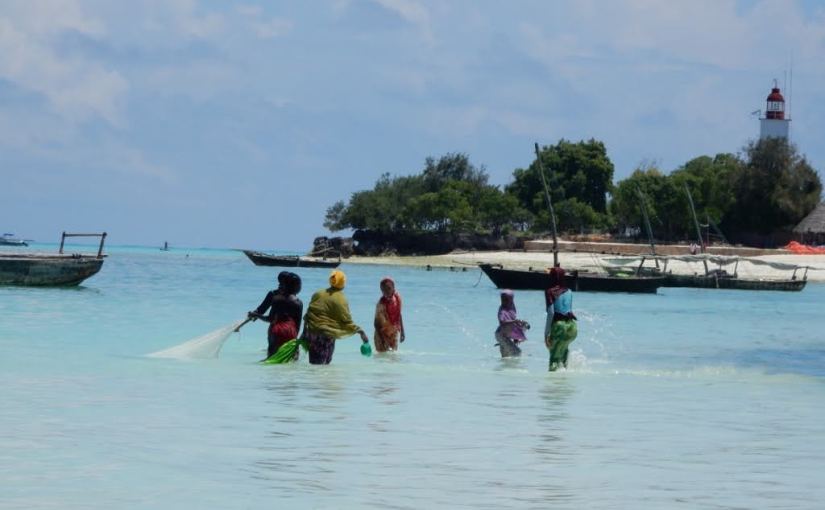
Young girls fishing on the Swahili coast, December 2017

A project which aims to explore perceptions of climate change on the Kenyan and Mozambican coast from the perspective of communities experiencing it firsthand. We specifically look at climate change as connected to the multiple other challenges that occur along these tropical coastlines which can affect social-ecological wellbeing and natural resource management. The project uses a framework based on relationality, which puts relations rather than objects or things at the centre and sees human and environmental networks of relations as inseparable and under constant change. Community forum theatre, focus groups and interviews were used as methods over the past two years with fishers, seafood traders, shop owners, food vendors and other types of people living on the East African coast in low-income settings. 

I’m Liz, a researcher supporting and learning in this project at the Stockholm Resilience Centre. And this is Mr Chris Cheupe, our main man in Kenya leading and developing this project. This is our third story in the storytelling series Tales of Change from Kwale Coast.  And it’s also the last narrative that came out of the fieldwork in Kenya that was centred around social issues. It is very much linked to the first two stories Them youths got no discipline and Digital Times. The many stories about early pregnancy that research participants wanted to discuss were embedded in the ideas of modernity or the digital times that we are now in and with the lack of discipline with the youth. So the three stories very much come together under a broader narrative about societal change universally experienced. Our next stories in this series will jump into the ecological narratives that were built up with participants’ stories in the field. Over to Chris! 

Hi, my name is Christian from Wildlife Conservation Society, Kenya and the FoRel project. Together with Liz we are going to tell you a story. The story is based on the findings of FoRel work done Msambweni (Kwale County, Kenya). It is a true reflection of the community and its social problems. The title of this story is “Babies Coming Early”. 

Babies coming early!

“Her dreams will be dead”

The main characters are the young girls of Msambweni, the secondary characters are the boys who impregnate them.

Background: Women are giving birth earlier now, early pregnancy is a trend and it’s not a good thing. It emerged in the 80s when boys and girls started to sit together in class, we sat three people at a desk, until the curtain of shyness was removed, there was now no respect for each other. Family planning is now available, injections and condoms were not available to Grandparents generations, they were waiting for their time, but now with family planning, Girls in class 6 will be educated about it. They think now they have access to contraception, which is the fault of the government, they think they can be free. Without school because of Covid, 80-90% of girls are behaving badly. Currently the village is full of pregnant girls, when schools reopen they are parents too! Due to corona they have no place to go or job to do. Mobile phones allow girls to interact with boyfriends on whatsapp or facebook, they can also see dirty things, phones contribute. Also the homestead, if a girl has no job or her personal needs are not taken care of, she will look for a boy to support her. Parents don’t push their children to school or madrasa. 

The conflict: This family planning education is affecting the girl’s discipline. She can now play the game without getting pregnant. The Government, with family planning is promoting sex. The government is handing out condoms- are you promoting sex or what? Because the girl uses family planning then she plays the game and there comes a time, after knowing someone then you stop using it, then there is the problem. In the past they were waiting for the right time, now they don’t even complete school. Children nowadays are not serious with education. People are married younger, you will find a child has a child. Now there is freedom, there is no religion denying men to sit with women. We poor have had our children with us during corona, the children are affected two times over, they don’t go to school, they don’t stay indoors, they come to the beach and do things that they were not doing. The rich study online. Girls can lie today about where they go and can be found at the beach with a man and in three to four days pregnant. If they find a boy to support them with some money, the boy wont give freely, he will demand sex and if you accept you will get pregnant. Most men nowadays want working women who can look after them, those men with money want girls or women to destroy or misuse for their own interest. They, the girls, cannot move ahead, they get early pregnancies and become Mama Karangas. Early pregnancies help you to work and do fish trading, that’s why we are selling fish. Unfortunately it’s the girl who will bear the responsibility and her life will be destroyed. 


Resolutions: Schools need to be opened. Family planning must be removed, it makes people feel the urge. When a girl is found pregnant only the man is arrested, they should both be arrested and put in jail for ten years, that would be better. Phones are not good for pupils. If your child is missing at home you need to reason where they are at all times. If the child gets a chance they use it. The madrassa will help us. Parents, let’s be strong in taking care of our children. All things we leave to god, we can only talk and warn our girls. Let them see that getting pregnant from a young boy will not help her. Rules from the village chief must be implemented, whoever is caught in the act should have action taken against them. All night celebrations need to be stopped also. We can use the BMUs (beach management units that manage the fisheries locally in Kenya) to stop our children, if we cooperate, all beaches, we can stop them coming. They need jobs and school.

(Note: This narrative comes directly from the voices of those in Msambweni and was arranged into this structure by us to present an accessible tale of the changes coastal communities experience today, how they view and understand them plus what solutions they see.)

Listen to the episode here:

Digital times

“It’s Digital- your time is over old man”

Chris & Liz attempt to record 🙂

Hi all this is Chris and Liz again from the FoRel Action Research Project based at the Stockholm Resilience Centre in Stockholm University Sweden and collaborating with Universidade Eduardo Mondlane in Maputo Mozambqiue and World Conservation Society in Mombasa Kenya. I’m Liz sitting at the Resilience Centre. 

FoRel stands for Forum theatre and Relational, two of the approaches the project is taking. The project will carry out forum theatre, a type of participatory theatre created to get the audience involved and empower them. The project is relational, a perspective which emphasizes that relations are more important than units, that everything unfolds or comes about from relations and experiences, never static. 

And I’m Chris at WCS in Mombasa Kenya. This FoRel project is about understanding and exploring people’s daily practises and relationships in the changing tropical coastlines of the western indian ocean. One of the major changes that coastal groups face is obviously climate change, so the project takes a special interest in the impacts and challenges it presents.

So today we will be telling you a short story from the story series “Tales of Change from Kwale Coast”, which we introduced in the last podcast- you can find that on spotify or on the website forumrelational.org. Just to highlight that the short stories in this series have emerged from the fieldwork data in Coastal Kenya- so interviews and discussions with different types of actors in 2019, like traderwomen, tradermen, retailers, fishers, food sellers, petty vendors. We have tended to not change the words or phrasing too much from the transcripts but just arranged them into a story structure. So each story has a main character(s), a background of the cause/the cause of the conflictual issue, a conflict itself, resolutions and obstacles (if any). 

We pulled apart these stories to try and organize complexity a little bit, but obviously they are all intertwined, not only with each other but with the perceptions of climate and environmental change, the rich expressions of sentiments and motivations with daily practises and relationships and also the temporal aspect which runs throughout the data- the practises of the past, the experiences of change and the hopes for future practises. The story today excludes the problems associated with climate and environmental change because this is how they were presented in the data to us. We will present them in other short stories.

Here we go with the story…….

Digital Times

“It’s Digital- your time is over old man”. This little story acts as a red thread in our fieldwork results, or as people see a driver of the changes and resulting conflicts they are seeing. It is also a hope or a goal to move towards in terms of practise e.g. fishing and farming. A lot of hopes and expectations for the future are based on becoming materially modern

There is a word that has so many answers, the word is digital. When the youth don’t respect the traditions, like helping the old man with his luggage, they say it’s digital, with such a word it’s over. Digital, let me do what I want. Even if I wear underwear or a bikini and walk around half naken, just leave me alone, it’s digital! Your time is over old man, you are out of fashion. This word has a lot of power

The digital world has given out big opportunities to the children of today. Currently we are in a digital period, things are easier, we have solar energy, we have touch screen phones. But the word digital is posing big challenges. Pupils can insult their teachers with no actions taken. Some parents may not even be called father, but by nicknames. When the government brings certain rules, that a parent should not cane, the government contributes to the bad behaviour, the lack of discipline today. These are digital things they say! It brings screens to all of them, they can access porn in this way. European things. Phones help girls to go and meet their boyfriends, they interact on whats app, facebook. Watching dirty clips and photos, then they go and do the practise. These are the digital generation, so with early pregnancy there are chances of the boy denying it. 

We need modern farming methods. In the past they were using traditional pesticides, but currently they cant use them because they are educated, but we cant afford modern pesticides, that’s the problem, we are in a digital world. We are learned. In the past our grandparents were the poorest but they could get higher harvest, but we, digital, dot com, and all intelligence we have, we get low harvest. What is wrong, what is happening? Modern children do not want to be engaged in farming. We do it alone, we the parents. They see the benefits of farming, at the end of the day they see cassava due to our effort, but they do not want to farm. We are in the digital era mother, that what they claim, farming is a past activity.

This is the digital era so the traditional ways of fishing are not getting fish. Our gears have retarded our development. In Lamu they have sea gear that beat the strong winds and goes deep sea for large fish, they can fish all year round. Our guys can’t take us more than 50km, even after a whole day. Our grandparents used these gears and they got fish, but not today, these are digital. The skills that we learned are analog not digital, this is dot com and we are still using traditional methods, we are lagging behind. We are still using canoes without engines, they are not safe and have low catch. 

From Kenyatta (the first President of Kenya) to Moi (the Second) to Kibaki (the Third), Kibaki said Tuendelee (Swahili for Lets go!), and we are moving on like that. Things are digital!

Introducing “Tales of Change from Kwale Coast”

Hi there this is Liz Drury O’Neill here with Chris Cheupe, together we are part of the FoRel project that’s based in Kenya, Sweden and Mozambique. 

We can introduce ourselves first before we introduce the project- Chris you want to go first 

Thank you very much, Liz. My name is Christopher Cheupe I am affiliated to WCS (Wildlife Conservation Society) Kenya, working on this project called for FoRel. And we are going to tell you stories, very beautiful stories from the work that we have been doing in Msambweni, welcome!

And I’m Liz, a postdoc at the Stockholm Resilience Centre which is the administering organization for this project. I work on FoRel supporting the project in whatever way is needed and also on another project based in Zanzibar looking at marine protected areas.

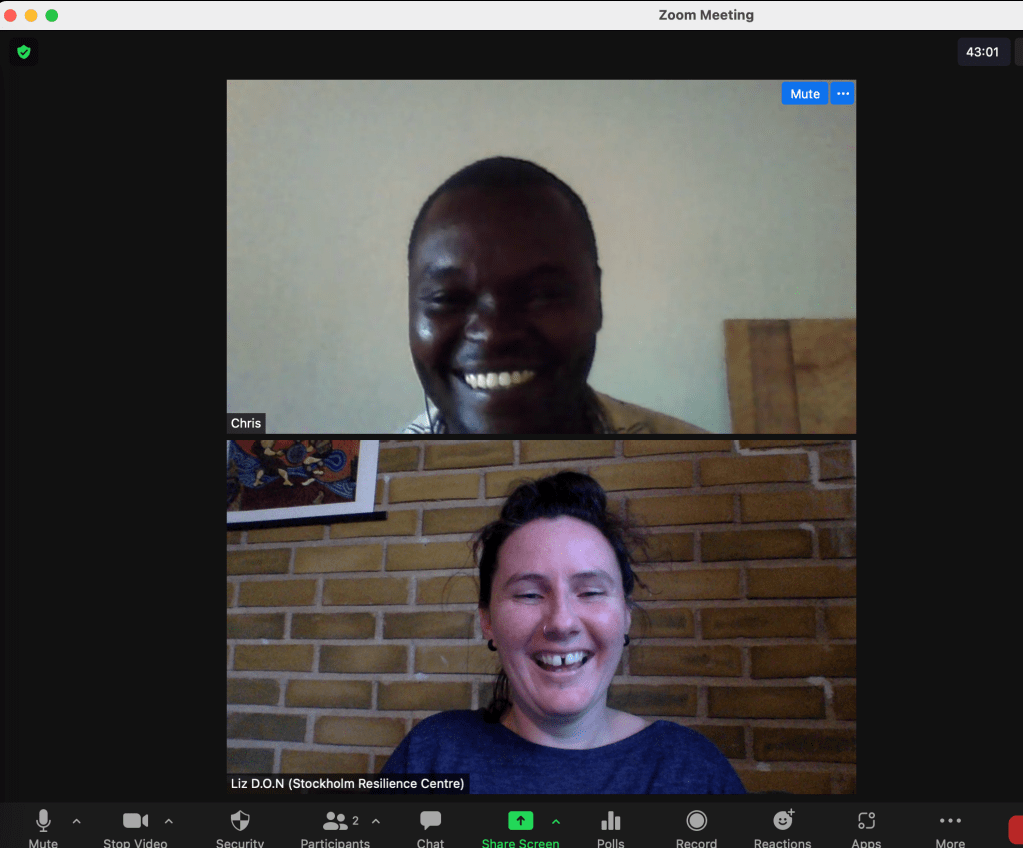
Chris & Liz meet to record this intro, from Stockholm & Mombassa #NovicePodcasters

This FoRel project is about understanding and exploring people’s daily practises and relationships in the changing tropical coastlines of the western indian ocean. One of the major changes that coastal groups face is obviously climate change, so the project takes a special interest in the impacts and challenges it presents. An important part of FoRel is using forum theatre, so this is a type of participatory theatre created to get the audience involved and empower them. This project wants to use such theatre in Kenya and Mozambique in the hope it can boost people’s abilities to act together in dealing with the different changes the climate and their social systems present to them.

So that would be the main focus of forel, but there is a lot of work needed to get to the theatre performances themselves, which take place in and are even performed by and with the coastal communities of Kenya and Mozambique. So over the last 2 years Forel has been carrying out interviews and group discussions with actors of different types, like fish traders, food vendors, tourist operators, fishers, community leaders, retailers etc. in different villages in Kwale County in Kenya and Inhaca Island in Mozambique. With the information from these methods the scripts of the theatre have been designed and we have been able to get to know more about their lives- specifically what changes people have experienced, their hopes and expectations for the future, how they go about their daily practices. 

Chris has been leading this work for the two years, would you like to give a sense of how its been and any reflections? 

Yeah, thank you very much. As Liz has talked, I’ve been leading this project in Kenya, in fact, I’ve been the main guy, and i’ve been working closely with the community, during data collection, I’ve worked on the on the data, transcribing it. And I’ve been involved in coding. So I have some reflection based on the work, from data connection, till the analysis. Now, when you look at doing data collection, we had a very interactive platform with respondents or the participants, whereby they were very willing and ready to contribute to the project through sharing out their views or perception with regard to the matters, the subject. So we had a very, very interactive time. Participants were willing to share information. The guides (leaders) of the community were also cooperating, because it was a project that the community themselves liked and they were ready to work, to work with us so that we could have a common goal. The community were happy when we introduced to them about the forum theater. And since they love acting, and throughout, they have been willing to listen to information, which have been coming from the performance, it can be, for example, a short movie or a theater performance. So they really liked that. And they asked us to, to involve them when the scripts are ready, so that they themselves can do the performance and have a chance to, to share out their problems in a better way. Because, themselves they’re the ones who have been experiencing the problem. So they will be, they’ll have a chance to share it to the bigger world. So, after the community gave us their information, we went ahead and transcribed, we did some coding and everything which was coming out was really really the touch of the community. And thereafter, we managed to develop some scripts based on the stories that have been saved by the community. And from those stories now, they are the ones that are we are going to share them with you. And I hope you are going to enjoy listening to them. Because they are the stories from the ground. The story from the people themselves. They have not been diluted in one way or another. So hope you will be enjoy.  Thank you

Thanks Chris, so as Chris was saying, The stories of this storytelling series we are introducing you to today are based on the interviews and discussions done with about 70, mainly Digo participants in Kwale County Kenya.

Chris do you want to introduce shortly the Digo to us

Okay, Digo, one of the Mijikenda subgroup communities in Kenya, Mijikenda is a Swahili word, which means nine tribes, nine homesteads and it consists of nine sub-tribes that include the Giriama community, the Kauma, the Chonyi, the Jibana, the Kambe, the Ribe, the Rabai, the Duruma and Digo. There are seven tribes, sub tribes, they are found in Kilifi County, while the two other sub tribes, that is Diigo and Duruma, are found in Kwale County. Now, the Digo community, the majority of them profess to the Islamic faith, they are Muslim. And in terms of the place they reside, especially the Msambweni area, they are dominant there. Most of the Digo, they are bilingual. They speak Swahili, and they also speak the local language called the Chidigo.

Thanks Chris. Great, So just to give some more information on these stories that we will tell, they were put together based on the transcripts from the focus groups and the interviews, which were translated from Kiswahili to English by Chris, to be qualitatively coded and analysed. So I try to use his direct translations of people’s words and not break apart sentences or text blocks, but put the stories together from them. So I basically have been combining different participants words on the same or similar topic to create a story. I also have created context or named the characters as they talk or interact in the situation I put them in. Making sure everything is anonymous and not traceable to the real people, that Chris worked with. 

But just to give my motivation for these stories, as Chris already mentioned his,- well I thought it would a cool thing to do as in this way we can hear directly from people’s experiences of climate, environmental and coastal changes in East Africa in a more engaging way than scientific articles or interviews. Also by highlighting a different group of characters or character in each story we can bring more of a diverse understanding of the impacts of different social and ecological changes to light, beyond that of fishermen or farmermen. I also feel these stories based on the interviews and discussions prioritise the voices of those that are and will be the most impacted by climate change. Also I’m just super bored of zoom and powerpoint. So I thought this would be more fun, to create stories from the very rich data Chris has created for us. Chris any final words’? 

Yeah, this is a great initiative. And it’s a new style or a technique, whereby we are going to present our data in a simpler way rather than a complex and difficult way. We are aiming at reaching the last person that could get this information in right way, in an inappropriate way so that they can absorb it and utilize the information for their self development. As you can see, this perspective, we are going to tell you the stories the way they are. And we believe that the people who are not much well informed, they will have an avenue or a space whereby they could get this information so that they can utilize them. So for this approach, I believe we are going to reach a wider and bigger audience and we believe that they are going to listen and to enjoy, the stories that we are going to tell them. Thank you Liz

Thank so much for listening, we’ll see you next time with some of the stories, from all of us here at FoRel- Kwaheri!

Science & Theatre – relationality starts with us

Last meeting with some of the project’s members.

Relationality, community and affection between members of the project occur in many ways, one of which is, in an interdisciplinary team, learning from each other. In our FoRel, science and theatre merge creating new possibilities for the process of (co)producing knowledge and for knowledge itself, Dadivo José and Christopher Cheupe from the teams in Mozambique and Kenya, respectively, shared and educated us about theatre, their trajectories and the importance of this approach in their respective countries.

Chris shared how the theatre has been used in research and dialogues between academia and communities and taught us about different participatory theatre types. He also shared his trajectory within the theatre and how he feels confident today, being a facilitator who makes sure to understand about the subject being dealt with and about the local context.

Dadivo, in turn, taught us how theatre has been used through the history of Mozambique since pre-colonial times to spread information and educate the population. He also told us about the use of theatre as a healing process. This theatrical healing process occurs with the audience (also in the community), and the actors. Dadivo shared how himself went through this transformative process, healing the traumas of the Civil War. Whoever is involved with theatre in Mozambique would ask at some point: “are we healing from the trauma by forgetting or remembering?”.

In both cases, the theatre has been used effectively to promote informative campaigns and raise awareness about different topics. Another point in common between the two presentations was that language in theatre must respect the local language and “context language”. However, as they put it, theatre allows us to create a safe space where local histories can be told. For them, one way to deal with sensitive themes or even with local power structures (for example, gender issues), is to use songs, dances and humour.

The FoRel project is immensely grateful for having professionals of such sensitivity, knowledge and competence, which allows us to learn whenever we meet and enriches the relationality of our project.

~~~~~~~~~~~~~~~~~~~~~~~~~~~~~~~~~~~~~~~~~~~~~~~~~~~~~~~~~~~~~~~~~~~~~~

Relacionalidade, comunidade e afeto acadêmico entre membros do projeto dá-se de muitas maneiras, uma delas é, no nosso time interdisciplinar, a aprendizagem entre o grupo. Em nosso FoRel, no qual a ciência e o teatro se fundem e criam novas possibilidades de produção de conhecimento e um novo conhecimento, Dadivo José do time de Moçambique e Christopher Cheupe do Quenia, compartilharam suas trajetórias e  nos educaram sobre teatro e a importância dessa abordagem em seus respectivos países. 

Chris compartilhou como o teatro vem sendo utilizado em pesquisas e diálogos entre academia e comunidade, além de apresentar os diferentes tipos de teatro de participação realizados no Quênia. Também compartilhou a sua própria trajetória dentro do teatro e como hoje ele se sente seguro em sendo um facilitador que, segundo ele, precisa entender sobre teatro, sobre o tema tratado e sobre o contexto local. 

Dadivo, por sua vez, nos ensinou como o teatro vem sendo utilizado na história de Moçambique, desde de tempos pré-coloniais para difundir informação e educar a população, bem como a utilização do teatro de hoje dia, considerada como um processo de cura. Esse processo teatral de cura ocorre com a audiência (a comunidade que se apresenta), e também com seus atores. Dadivo compartilhou como ele próprio passou por esse processo transformador, curando os traumas da Guerra Civil, “estamos nos curando do trauma esquecendo ou lembrando dele?”.

Em ambos os casos o teatro vem sendo utilizado de maneira efetiva para promover campanhas informativas e aumentar a consciência sobre temas diversos. Outro ponto em comum entre as duas palestras foi o fato de que a linguagem no teatro deve respeitar a Língua e linguagem (contexto) local. Entretanto, O teatro nos permite criar esse local seguro para contar a história local. E uma maneira para se lidar com temas sensíveis ou até mesmo com as estruturas de poder locais (por exemplo, gênero), compartilhado por eles, é a utilização de canções, danças e humor.

O projeto FoRel é imensamente grato por contar com profissionais de tamanha sensibilidade, conhecimento e competência, que nos permite aprender sempre que nos reunimos e que enriquece o projeto relacional dentro da relacionalidade do nosso projeto.  

Short Interviews – Fieldwork area – Kenya

Professor Halimu Shauri – Project leader of the Kenyan team. He is Associate Professor in Sociology at Pwani University in Kenya. Here, Professor Shauri talks about his home, Msambweni, the project’s focus area in Kenya.


1- What is your relationship with the studied area? 
I was born, attended my basic education and secondary education in the area. Am thus very conversant with the area, the people and how it was and how the area is due to the changes that have been taking place, some social and others environmental.

2- Is there any particularity about the place and/or its communities that you could share?
The community is very social and hardworking. The peculiarity would be low levels of literacy that have contributed to the poor well-being  and livelihood strategies that have had an impact on the environment.

3- What could communities gain with a project like the FoRel?
Knowledge, especially on environmental conservation that has contributed to the challenges of poor livelihoods to some extent in the area. Conservation of fish breeding sites, especially Octopus, which does very well in the area, will certainly help improve the livelihood conditions of the community.

4- What are your hopes for the future of the area, and how do you believe the project could contribute to this?
Am positive about the future of the area with conservation. If we are able to convince the community on the need to conserve fish breeding grounds, like for example, have a community fish breeding conservation area, owned and protected by themselves through this project, we will have had a breakthrough for the community’s future.

5- How could the relational perspective help to understand the region?
All what humanity does has some elements of relational-ity. What we do needs a lot of synergy from others. We are not self sustaining and hence we in a way depends on others for our needs and survival. Relational perspective therefore helps us understand more our common humanity for symbiotic relationship, which is the whole mark of human survival. We are humans and relational perspective enhances our humanity in the way we interact, engage and transact business with each other for individual and common needs and development.


Short Interviews – Caroline Abunge on Relationality

Here we present a series of short interviews with some of those involved in the project during which we discuss their perspectives on the relational approach that is at the core of the project. We talk about how it has influenced, influences and/or will influence their work. With these interviews, we investigate whether relationality might allow us to cross academic barriers and even the frontier between research (work) and the daily and personal lives of those who start to think from this perspective.

02/11/2020
Caroline Abunge is a socio-economic research scientist involved in publications with the Wildlife Conservation Society Marine program and part of the FoRel Kenya’s team. She has been working with Coastal communities on various projects encouraging sustainability of coral reef fisheries through fish landings monitoring, seeking perceptions of resource users on different conservation options and active feedback of the research findings to same communities and stakeholders. She is also part of the current FoRel fieldwork in Msambweni. 

1- What impressed you most about your fieldwork?
The respondent’s excitement about the methodology. They were happy to know that the result of the surveys is to have theater play to help them understand the concept of climate change better.

2- What was a surprise factor in the field?
Despite the major changes in the fishery sector, over 80% of respondents did not want to leave fishery but supplement their marine related activity with another job. The community was very free to talk about their social changes and challenges.

2.1- What did you expect to find and did not find?
Some willingness to leave fishery for other occupations with better returns.

2.2- What did you not expect to find but found?
Despite the helping culture in the muslim community and religion, fishers got very little help from their wealthy and capable friends and other family members. This was because fishing was considered unprofitable therefore nobody wanted to put their money in it. It was considered as both very important as an employment opportunity but very useless as it made no difference to those involved.

3- What did you think was different about doing fieldwork with a relational perspective?
The deeper understanding of daily activities. Apart from knowing what one does, we get to know when, how, with whom; these three elements are unique to this project and not found in others.

4- What are your thoughts so far, would you like to add something?
I could have been interesting to investigate all different activities in the community. It was mostly marine, and other activities came out as partial or alternative livelihoods thus not discussed in details.

Thank you!